

A straight, well-aligned smile is about more than just appearance—it plays a vital role in long-term oral health, comfortable chewing, and effortless plaque control. Yet, for many adults and teens across the Darling Downs, the thought of wearing traditional metal braces with wires and brackets can feel daunting.

Fortunately, modern orthodontic innovations have transformed how we align teeth. For those exploring Invisalign Toowoomba offers, clear aligners deliver a virtually invisible, removable, and comfortable alternative to fixed appliances.
Whether you are looking to close a front gap, straighten crowded lower teeth, or correct an uneven bite, working with an experienced Invisalign dentist Toowoomba allows you to transform your smile discreetly on your own schedule.
What Is Invisalign and How Does It Work?
Invisalign is an advanced orthodontic system that uses a series of custom-milled, medical-grade thermoplastic aligners to apply continuous, gentle pressure to your teeth.
Rather than tightening wires every month, you progress through a sequential series of clear trays. Each set of aligners is engineered to move designated teeth by fractions of a millimetre over a one- to two-week wear period before you switch to the next tray.
The technology behind clear aligners Toowoomba patients use is powered by patented SmartTrack material. This flexible plastic fits snugly over the contours of your dental arch, improving control over complex tooth movements like rotations and root uprighting.
Clear Aligners vs Traditional Metal Braces
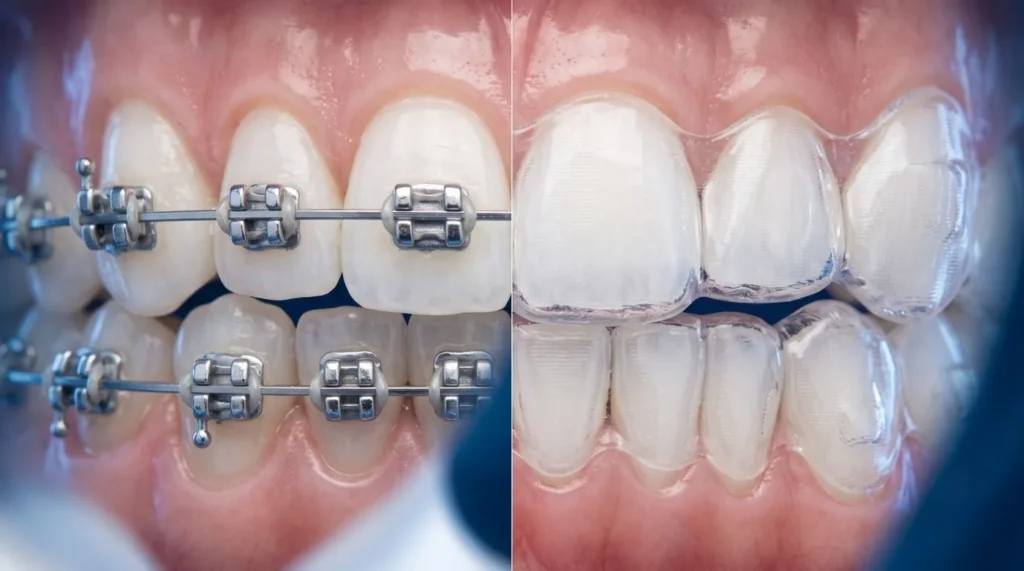
When considering orthodontic treatment, comparing clear aligners with traditional fixed braces highlights key lifestyle differences:
| Feature | Invisalign (Clear Aligners) | Traditional Metal Braces |
| Visibility | Virtually invisible; made from clear, custom-fitted plastic. | Highly visible; consists of metal or ceramic brackets and wires. |
| Removability | Removable for eating, drinking, brushing, and flossing. | Fixed securely to the teeth for the duration of the treatment. |
| Dietary Restrictions | None. You remove the trays to eat whatever you like. | Requires avoiding hard, crunchy, or sticky foods that can break brackets. |
| Comfort | Smooth plastic edges prevent irritation to cheeks and gums. | Metal wires and brackets can occasionally poke or cause mouth ulcers. |
| Oral Hygiene | Easy to maintain normal brushing and flossing routines. | Requires special tools (like interdental brushes or floss threaders) to clean around wires. |
| Clinic Visits | Fewer appointments needed; you switch trays at home and check in periodically. | Requires more frequent visits for wire tightening and adjustments. |
While traditional braces remain highly effective—especially for severe or complex bite issues—Invisalign offers unparalleled freedom and discretion for the vast majority of mild to moderate orthodontic cases.
What Conditions Can Clear Aligners Treat?
Today’s clear aligner systems handle a broad spectrum of orthodontic issues, from straightforward aesthetic touch-ups to complex bite corrections:
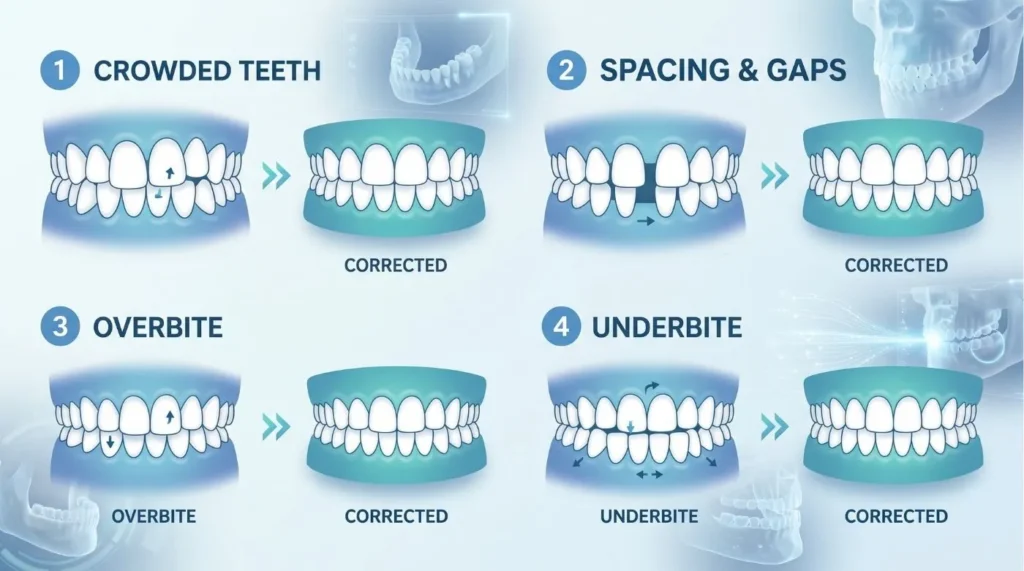
- Crowded Teeth: When the jaw lacks sufficient space, teeth can overlap, twist, and push forward, creating hard-to-reach pockets where plaque builds up.
- Spacing and Gaps: Wide gaps between teeth can trap food debris and expose delicate gum tissue to irritation.
- Overbite: When the upper front teeth excessively overlap the lower teeth, accelerating wear on lower incisors.
- Underbite: When the lower front teeth rest in front of the upper teeth, placing stress on the jaw joints.
- Crossbite: When one or more upper teeth bite on the inside of the lower teeth, causing uneven enamel erosion.
- Open Bite: When the front upper and lower teeth do not meet when the back teeth touch, making it difficult to bite into foods cleanly.
Daily Life with Invisalign: Practical Guidelines

Adapting to life with clear aligners is straightforward, but patient compliance is key to achieving your projected results:
1. The 20-22 Hour Rule
Because aligners are removable, their success relies on your commitment to wear them for 20 to 22 hours per day. Trays should only be taken out during meals, hot beverages, and daily oral hygiene routines. Leaving them out for extended periods delays tooth movement and can cause aligners to feel tight or uncomfortable.
2. Eating and Drinking
You never have to give up crisp apples, crusty breads, or popcorn during aligner therapy. Simply remove your aligners before eating or drinking anything other than plain cool water. This prevents staining the plastic and protects the trays from warping under hot liquids.
3. Oral Hygiene
Before popping your aligners back in, brush and floss your teeth to prevent trapping food particles and sugars against your enamel. If you’re out at a restaurant without a toothbrush, rinsing your mouth thoroughly with water is a helpful quick alternative until you get home.
4. Cleaning Your Aligners
Clean your aligners daily using a soft-bristled brush and lukewarm water. Avoid hot water, which can warp the custom-moulded plastic, and skip abrasive regular toothpastes that can scratch the clear surface and make it cloudy.
Combining Clear Aligners with a Complete Smile Makeover
Straightening teeth is frequently the ideal first step in a wider smile makeover Toowoomba plan.
When your teeth sit in their proper physiological positions, any subsequent aesthetic enhancements—such as porcelain veneers or composite restorations—can be made much more conservatively, requiring little to no enamel removal.
Furthermore, correct tooth alignment distributes biting forces evenly across your dental arches, protecting existing fillings, restorations, or dental implants from excessive mechanical stress.
Retainers: Safeguarding Your Investment
Once your aligner treatment is complete and your teeth have reached their target positions, the bone and ligaments around them need time to stabilize.
Wearing a clear custom retainer (such as a Vivera retainer) prevents teeth from shifting back toward their original positions. Typically, patients wear retainers full-time for a few weeks before transitioning to comfortable nighttime-only wear.
Frequently Asked Questions
Does Invisalign give you a lisp?
You may notice a minor, temporary lisp for the first 24 to 48 hours as your tongue adapts to the slim plastic layer over your teeth. Most patients adjust quickly and speak with normal clarity within a few days.
How often do I switch to new aligners?
Most treatment plans involve switching to a fresh set of aligners every 7 to 14 days, as directed by your clinician. Each new tray continues the planned progression toward your target alignment.
What should I do if an attachment comes off or an aligner cracks?
Don’t worry—small composite attachments can be easily replaced. Continue wearing your current tray if comfortable, or switch to your previous tray if it’s damaged, and contact our emergency dentist team to book a quick check.
About Westbrook Family Dental
Conveniently located just outside Toowoomba, Westbrook Family Dental provides modern orthodontic and cosmetic dental solutions for patients across Westbrook, Toowoomba, Oakey, Pittsworth, and the Darling Downs.
Our clinicians utilise advanced 3D digital scanners—eliminating the need for uncomfortable physical impression putty—to plan your aligner journey with precision. We believe in clear, compassionate communication, helping you achieve a healthier, straighter smile on terms that fit your daily schedule.
- Address: 85 Main Street, Westbrook QLD 4350
- Phone: (07) 4529 7477
- Website: westbrookdental.com.au
Read More / Learn More:
- Explore Orthodontics & Clear Aligners
- Tailored smile transformations with Cosmetic Dentistry
- Brighten your newly straightened smile with Zoom Teeth Whitening
- Permanent tooth restorations with Dental Implants
- Comprehensive preventive care at General Dentistry
- Same-day urgent care with our Emergency Dentist




Comments are off for this post.