
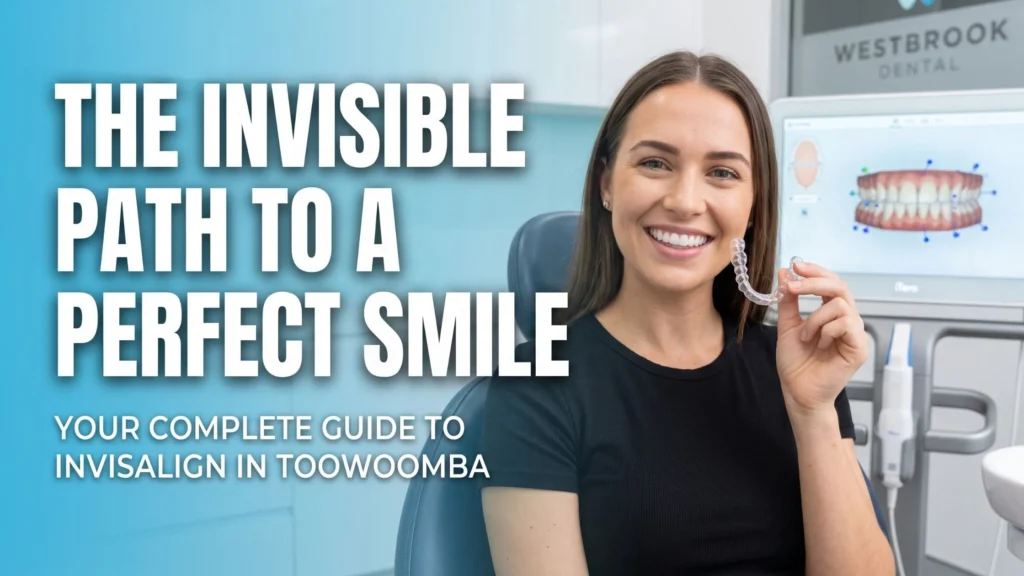
Living in a vibrant, community-focused city like Toowoomba means you are constantly interacting with others. Whether you are networking at a local business luncheon, enjoying a performance at the Empire Theatre, or simply catching up with friends for a weekend walk through Laurel Bank Park, your smile is constantly on display. It is your most powerful tool for first impressions, communicating warmth, confidence, and approachability.

But what if you are actively hiding that smile?
For decades, adults who suffered from crooked, crowded, or gapped teeth faced a difficult dilemma. The desire for a straight, healthy smile was strong, but the thought of enduring two years of highly visible, uncomfortable metal brackets and wires was a dealbreaker. No adult wants to attend a crucial corporate meeting or a romantic dinner feeling like a teenager in braces.
Fortunately, the world of orthodontics has undergone a massive technological revolution. The days of “metal mouths” being the only option are officially behind us. Today, Invisalign Toowoomba offers a sophisticated, virtually invisible, and highly predictable way to transform your alignment without putting your lifestyle on hold.
In this comprehensive, deep-dive guide, we are going to pull back the curtain on clear aligner technology. We will explore the cutting-edge science behind how it works, compare it honestly to traditional braces, guide you through the day-to-day reality of wearing aligners, and explain how straightening your teeth sets the ultimate foundation for a complete aesthetic transformation.
Chapter 1: The Evolution of Orthodontics and Clear Aligners
To truly appreciate the magic of modern aligners, we have to understand how teeth actually move. Whether you use metal brackets or clear plastic, the biological mechanism is exactly the same: consistent, gentle pressure applied to the crown of a tooth causes the bone tissue surrounding the tooth’s root to remodel. Bone on one side of the root dissolves (resorption) while new bone builds up on the other side (deposition), allowing the tooth to slowly drift through the jawbone into a new position.
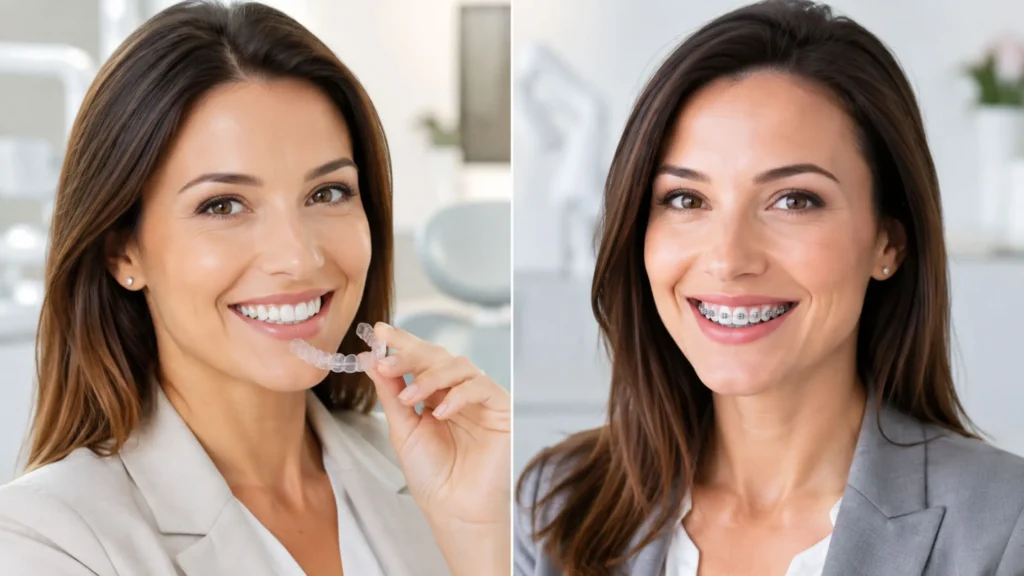
Historically, applying this pressure required gluing metal brackets to the teeth and tying them together with tension wires. Every few weeks, a dentist or orthodontist would physically tighten the wire to increase the pressure.
Enter clear aligners Toowoomba.
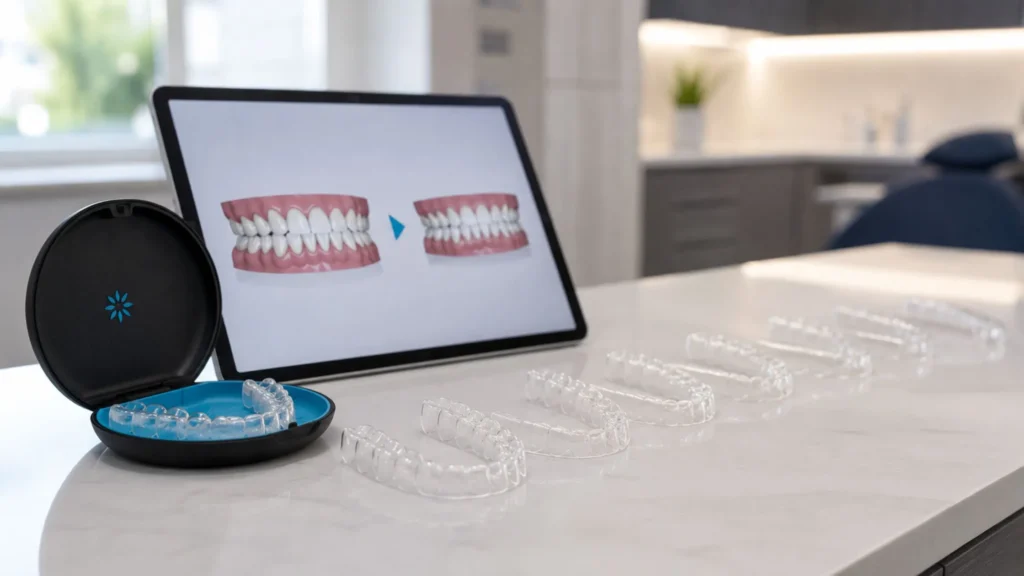
Instead of fixed hardware, the Invisalign system utilizes a sequential series of completely removable, transparent trays. These are not just standard pieces of plastic. They are crafted from a patented, highly elastic, and BPA-free material known as SmartTrack®. This specific material was engineered over eight years and tested against hundreds of other plastics specifically for its ability to deliver a constant, gentle force, resulting in faster and more comfortable tooth movement.
When you wear an aligner, it is slightly straighter than your current teeth. The plastic gently pushes against your teeth, coaxing them into the shape of the tray. Once your teeth match the tray, you discard it and move to the next tray in the series, continuing the gradual journey toward perfect alignment.
Chapter 2: The Step-by-Step Clinical Journey
If you are considering this life-changing treatment, knowing exactly what to expect can alleviate any anxiety. When you partner with a certified Invisalign dentist Toowoomba, your journey will follow a highly structured, digitally driven pathway.
Step 1: The Digital Consultation (No More Gooey Impressions!)
Remember the old days of orthodontics, where the dentist would force a massive metal tray filled with foul-tasting, gag-inducing pink putty into your mouth to take an impression? Thankfully, those days are over.
Your journey begins with a state-of-the-art digital scan. Using an advanced wand (such as the iTero 3D scanner), your dentist will capture thousands of images of your teeth per second, stitching them together to create a highly accurate, interactive 3D map of your mouth. Your dentist will also take a series of digital photographs and comprehensive X-rays to assess the health of your jawbone and tooth roots.
Step 2: The ClinCheck® 3D Simulation
This is where the magic happens. Your digital scan is uploaded into a proprietary software program called ClinCheck. Your dentist acts as the architect, programming the exact movement of every single tooth from its current position to its ideal final destination.
The most exciting part? You get to see the future. The software generates an interactive, time-lapse 3D animation of your customized treatment plan. You can watch your teeth move on the screen and see exactly what your final smile will look like before you ever commit to wearing a single aligner!
Step 3: Manufacturing Your Custom Aligners
Once you and your dentist approve the 3D simulation, the data is sent to a specialized laboratory where your entire series of custom aligners is 3D printed. Depending on the complexity of your case, your series might consist of anywhere from 15 to 50+ sets of aligners.
Step 4: Fitting and “Attachments”
When your aligners arrive at the clinic, you will come in for your fitting appointment. During this visit, your dentist may apply “attachments” (also known as SmartForce® features) to your teeth.
What are attachments? Because plastic aligners are smooth, they can struggle to grip teeth that are exceptionally round or need to be rotated significantly. Attachments are tiny, tooth-colored dots of composite resin (the same material used for fillings) that are temporarily bonded to specific teeth. They act like tiny “handles” that the aligner snaps onto, allowing it to exert complex, directional forces. They are virtually invisible and are polished away completely at the end of your treatment.
Step 5: Progress Check-Ins
You will typically switch to a new set of aligners every 1 to 2 weeks at home. Unlike traditional braces, which require painful wire-tightening appointments every month, your clinic visits will be brief and spaced out. You will visit your dentist every 6 to 8 weeks simply to pick up your next batches of aligners and allow the dentist to ensure your teeth are tracking perfectly with the digital plan.
Chapter 3: Invisalign vs. Traditional Braces: The Honest Comparison
Why have clear aligners become the absolute gold standard for adult orthodontics? When you compare the daily realities of the two systems, the advantages become crystal clear.
| Feature | Invisalign Clear Aligners | Traditional Metal Braces |
| Aesthetics | Completely transparent. Most people will never notice you are wearing them, even in photographs. | Highly visible metal brackets, bands, and wires. |
| Dietary Freedom | 100% unrestricted. You remove the trays to eat, meaning you can still enjoy crusty bread, apples, and sticky sweets. | Highly restricted. Hard, sticky, and chewy foods break brackets and snap wires. |
| Oral Hygiene | Effortless. Remove the trays to brush and floss your teeth exactly as you normally would. | Difficult. Requires special interdental brushes and threaders to weave floss under the main wire. |
| Comfort | Smooth, custom-cut plastic won’t irritate your mouth. Gentle pressure reduces overall tooth soreness. | Metal brackets and wire ends frequently chafe the inner cheeks and lips, causing painful ulcers. |
| Emergencies | Very rare. There are no wires to snap or brackets to break. If you lose a tray, you simply move to the next one early or wear the previous one. | Common. A broken bracket or poking wire requires an immediate, unplanned trip to the clinic. |
| Predictability | High. The 3D software plans every micro-movement in advance. | Moderate. The orthodontist adjusts the wire manually based on visual progress at each visit. |
Chapter 4: Beyond Aesthetics: The Hidden Health Benefits of Straight Teeth
While most people seek out a premier cosmetic dental clinic Toowoomba for the visual benefits of straight teeth, the truth is that orthodontics is profoundly important for your overall medical health. Straightening your teeth is not just an act of vanity; it is an act of preventative healthcare.
- Eradicating “Plaque Traps”: When teeth are crowded, rotated, or overlapping, they create tight, inaccessible crevices where your toothbrush bristles and floss simply cannot reach. These hidden pockets become breeding grounds for harmful bacteria, leading to aggressive plaque buildup, foul breath, and hidden tooth decay. Straight, evenly spaced teeth are exponentially easier to keep clean.
- Combating Gum Disease (Periodontitis): The bacteria hiding in those crowded crevices don’t just attack the tooth enamel; they attack the gums. Swollen, bleeding gums are the first sign of gingivitis, which can progress into severe periodontal disease, eventually destroying the jawbone and leading to tooth loss. Proper alignment allows your gums to fit securely around the teeth, creating a strong defensive barrier against infection.
- Preventing Premature Wear and Tear: If your bite is misaligned (an overbite, underbite, or crossbite), your upper and lower teeth are crashing into each other at incorrect angles every time you chew or speak. Over the years, this abnormal friction grinds down your protective enamel, leading to chipped edges, flattened teeth, and intense sensitivity. Correcting the bite preserves the structural integrity of your teeth for decades to come.
- Alleviating Jaw Pain and TMJ: A bad bite forces the muscles of your jaw to work overtime to compensate. This constant muscular strain can lead to temporomandibular joint (TMJ) disorders, which manifest as chronic jaw pain, clicking sounds, neck aches, and severe tension headaches. A balanced bite allows your jaw muscles to finally relax.
Because of these profound functional benefits, clear aligner therapy is frequently the foundational first phase of a comprehensive smile makeover Toowoomba. You cannot build a beautiful house on a crooked, unstable foundation. By aligning the teeth first, your dentist ensures that any subsequent cosmetic work (like porcelain veneers or composite bonding) will be perfectly proportioned and structurally sound.
Chapter 5: Mastering Day-to-Day Life with Clear Aligners
Clear aligners offer unparalleled freedom, but that freedom comes with a significant responsibility: compliance. Because you can remove the appliance, the success of your treatment is entirely in your hands.
To achieve the stunning results you saw in your 3D ClinCheck video, you must master the daily habits of wearing aligners. Here are the golden rules for success:
1. The 22-Hour Rule is Non-Negotiable
Your aligners only work when they are in your mouth. To ensure your teeth move according to the schedule, you must commit to wearing your aligners for 20 to 22 hours every single day. This leaves you with roughly 2 to 4 hours a day to remove them for eating, drinking, and brushing your teeth. If you consistently wear them for only 15 hours a day, your teeth will not move as planned, and your next set of aligners will not fit.
2. Water Only While Wearing Trays
When your aligners are snapped into place, you should only consume cool or room-temperature water.
- No Hot Drinks: Hot tea or coffee will melt and warp the precision-molded plastic, rendering the aligner useless.
- No Sugary or Acidic Drinks: If you drink soda, sports drinks, or wine with your aligners in, the liquid will seep under the plastic and pool directly against your teeth. Because your saliva cannot wash it away, this creates an acidic bath that rapidly eats away at your enamel, leading to rampant decay.
- No Colorful Drinks: Turmeric lattes, red wine, and dark colas will quickly stain the transparent plastic, making your teeth look yellow and completely ruining the “invisible” aesthetic.
3. The “Brush Before You Snap” Rule
After enjoying a meal or a snack, you cannot simply pop your aligners back in. If you have food particles or sugars on your teeth and you cover them with a tight plastic tray, you are trapping bacteria against your enamel. Always carry a travel toothbrush and toothpaste with you. Brush and floss your teeth thoroughly before reinserting your aligners. If you are in a situation where brushing is impossible, rinse your mouth vigorously with water and chew sugar-free gum for a few minutes before putting the trays back in.
4. Cleaning Your Aligners Correctly

Your aligners need to be cleaned just as diligently as your teeth.
- Do: Brush them gently with a soft-bristled toothbrush and clear antibacterial soap or specialized cleaning crystals.
- Don’t: Never use colored mouthwash (it will dye the plastic blue or green) or abrasive toothpaste (it will scratch the plastic, making it look cloudy and visible).
5. Managing “New Tray Day” Discomfort
Whenever you switch to a new set of aligners, you will feel a sensation of tightness and pressure. This is a good thing! It means the trays are working and actively shifting your teeth. This minor discomfort typically peaks within the first 12 to 24 hours.
- Pro-Tip: Always switch to your new aligners right before you go to bed. By doing this, you will sleep through the initial hours of peak tightness, and by the time you wake up, your teeth will have already begun adjusting to the new position.
Chapter 6: Who is NOT a Candidate for Clear Aligners?
While the technology has advanced astronomically—allowing dentists to treat highly complex cases that previously required jaw surgery—Invisalign is not a magical cure-all for every single orthodontic issue.
During your consultation, an honest and expert practitioner will assess if you are an ideal candidate. You may need to explore traditional braces or alternative therapies if you have:
- Severe Bite Issues: Extreme overbites, underbites, or skeletal jaw discrepancies often require the heavy-duty mechanics of traditional braces, sometimes combined with oral surgery.
- Short or Pegged Teeth: Aligners need surface area to grip. If your teeth are exceptionally short, round, or pegged, the plastic trays may slip off repeatedly.
- Extensive Prior Dental Work: Multiple dental bridges (which fuse teeth together) or a mouth full of large crowns can make it difficult to move individual teeth predictably.
- Lack of Discipline: If you know you do not have the lifestyle habits or the discipline to commit to wearing the trays for 22 hours a day, traditional fixed braces are a much safer investment, as they remove the burden of compliance.
The Retention Phase: Protecting Your Investment
You have worn your final aligner. Your teeth are perfectly straight. Your attachments have been polished off. Are you completely finished?
Not quite.
Teeth have a “memory.” The periodontal ligaments that hold your teeth in the bone are elastic. Once the active pressure of the aligners is removed, those elastic ligaments will try to pull your teeth right back to their original, crooked positions—a phenomenon known as orthodontic relapse.
To prevent this and protect your investment, you must wear a retainer.
Modern retainers (like Vivera® retainers) look exactly like your clear aligners, but they are made from a significantly thicker, more rigid plastic designed to lock teeth in place rather than move them. Typically, you will wear your retainers full-time for a few months while the jawbone fully hardens around your new tooth positions. After that, you will transition to wearing them only at night while you sleep—a habit you should maintain for the rest of your life to guarantee your smile stays flawless forever.
Take Control of Your Confidence
You deserve to live a life without hesitation. You deserve to laugh freely, speak confidently, and smile boldly in every photograph.
By leveraging the power of clear aligner technology, you can achieve the perfectly straight, healthy teeth you have always wanted, entirely on your own terms. It is discreet, predictable, and deeply transformative.
If you are ready to stop hiding your smile and start designing your future, the first step is simple. Reach out to a certified provider for a digital scan and a ClinCheck simulation. Seeing what your smile could look like is an incredibly powerful, motivating experience. Don’t wait another year to achieve the confidence you deserve.
Read more:






Comments are off for this post.