
There is something truly special about living in Toowoomba. From taking in the panoramic views at Picnic Point and strolling through the garden displays during the Carnival of Flowers to enjoying a slow weekend brunch at a local café on Margaret Street, our vibrant city encourages us to connect, socialize, and smile.

However, if you find yourself feeling hesitant to show your teeth when taking photos with friends or catching up with colleagues, you are far from alone. Over time, our teeth naturally lose their bright, youthful sparkle. Daily habits—like enjoying a morning flat white, sipping evening black tea, or relaxing with a glass of red wine—gradually dull the natural luster of our enamel.
If you are looking for a fast, reliable, and non-invasive way to dramatically refresh your look, professional teeth whitening Toowoomba treatments offer an incredible solution. But with countless over-the-counter kits, DIY trends, and social media hacks flooding the market, how do you separate marketing fluff from safe, effective dental care?
In this comprehensive pillar guide, we will unpack the science behind tooth staining, explore why professional care outshines DIY products, detail the clinical whitening process step-by-step, and share actionable maintenance strategies to keep your smile glowing for years to come.
The Science of Staining: Why Do Teeth Lose Their Luster?
To understand how whitening works, we first need to look at why teeth discolor in the first place. Your teeth are made up of several layers. The visible outer layer is enamel, a hard, crystalline structure that protects the delicate inner parts of the tooth. Beneath the enamel lies dentin, a softer, naturally yellowish material that makes up the bulk of the tooth’s structure.
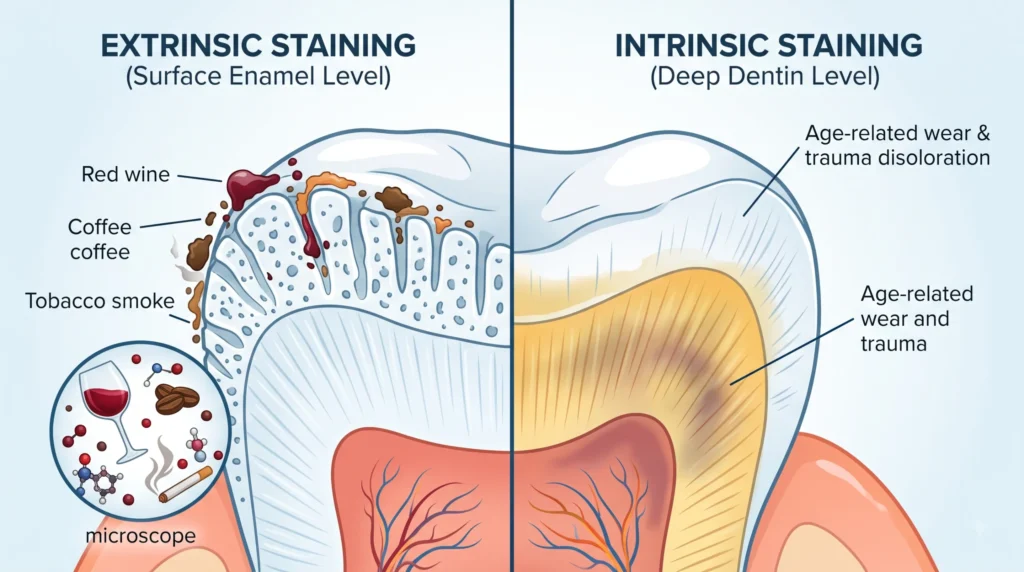
Although enamel is the hardest substance in the human body, it is far from smooth on a microscopic level. It contains tiny pores, ridges, and microscopic rods. Over time, pigments from the things we consume penetrate these pores, causing the teeth to darken.
Dentists categorize tooth discoloration into two primary types:
1. Extrinsic Staining (Surface Stains)
Extrinsic stains occur on the outer surface of the enamel. They are primarily caused by lifestyle factors and dietary habits.
- Chromogens: Intense color pigments found in dark foods and drinks (such as coffee, dark tea, soy sauce, berries, and red wine) that easily attach to white enamel.
- Tannins: Organic compounds found in wine, tea, and chocolate that make it even easier for chromogens to stick to the teeth.
- Tobacco Use: Tar and nicotine are notorious for creating deep, dark yellow or brown surface stains that are stubbornly difficult to brush away.
- Plaque Build-Up: Inadequate oral hygiene allows sticky plaque and hardened tartar to accumulate, creating a dull, yellowish film over the enamel.
2. Intrinsic Staining (Internal Discoloration)
Intrinsic stains occur within the deeper dentin structure of the tooth, lying beneath the outer protective enamel layer.
- Aging: As we age, the outer layer of tooth enamel naturally wears down and thins out due to daily chewing and acidic erosion. As the enamel thins, the naturally yellow dentin underneath becomes far more visible.
- Trauma: Physical injury to a tooth (from a sports accident or fall) can cause the tooth to react by laying down more dark dentin, or it can damage the internal nerve tissue, causing the tooth to turn gray or black.
- Medications: Exposure to certain antibiotics (such as tetracycline or doxycycline) during early childhood when teeth are developing can cause permanent, deep-set intrinsic bands of gray or brown discoloration.
- Excess Fluoride (Fluorosis): Consuming high levels of fluoride during tooth development in infancy can result in faint white streaks or mottled brown spots on the teeth.
Extrinsic stains respond exceptionally well to topical bleaching treatments. Intrinsic stains, while more stubborn, can often be lightened significantly with clinical-grade whitening protocols, though severely discolored teeth may sometimes require combination therapy with composite bonding or ceramic veneers.
Supermarket Kits vs. Professional Care: The Hidden Risks of DIY Bleaching
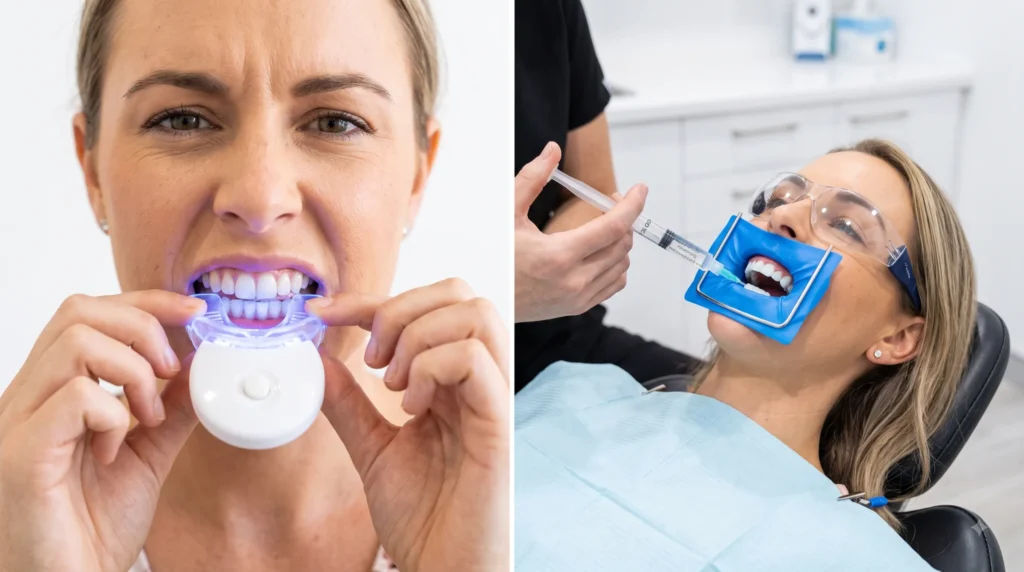
Walk down any pharmacy or supermarket aisle today, and you will encounter an overwhelming selection of whitening products. From bleaching strips and charcoal toothpaste to purple “color-correcting” serums and blue-light LED mouthpieces, the promises are tempting. However, there are stark differences between over-the-counter (OTC) products and treatments administered by a qualified professional.
The Chemical Reality: Concentration Matters
The active ingredient in virtually all effective whitening systems is peroxide—either hydrogen peroxide or carbamide peroxide. When applied to the tooth, peroxide breaks down into oxygen molecules. These tiny oxygen molecules penetrate the microscopic pores of the enamel, breaking apart the chemical bonds of the dark pigment molecules lodged within the tooth.
- Over-the-Counter Products: In Australia, strict safety regulations limit OTC whitening products sold in supermarkets to very low concentrations (typically less than 3% hydrogen peroxide or 6% carbamide peroxide). Because the active concentration is so weak, these products can only clear minor, surface-level stains.
- Professional Treatments: A registered dental professional is legally permitted to use high-strength, clinical-grade bleaching agents (often ranging from 15% to 35%+ hydrogen peroxide). These powerful gels penetrate deep into the enamel and underlying dentin to break apart stubborn, long-standing stains safely.
The Dangers of DIY Trends
Warning: Popular DIY alternatives can do far more harm than good to your long-term dental health.
- Abrasive Charcoal Pastes: Many trendy activated charcoal toothpastes claim to “scrub away” stains. In reality, charcoal is highly abrasive. It works like sandpaper, scrubbing off the outer layer of your precious enamel. Once that enamel is gone, it can never regenerate—leaving your teeth permanently weaker and exposing the darker yellow dentin underneath!
- Purple “Color Corrector” Serums: These products use purple dyes to temporarily neutralize yellow tones using basic color wheel optics. They do not alter the shade of your teeth or remove stains; the effect disappears as soon as you rinse your mouth or drink water.
- Ill-Fitting Trays & Acidic Gels: Generic, one-size-fits-all trays from online kits allow bleaching gel to leak out onto your delicate gum tissue. This can cause chemical burns, severe inflammation, and extreme, sharp tooth sensitivity.
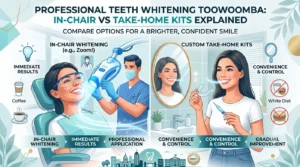
Professional Options: In-Chair vs. Take-Home Whitening
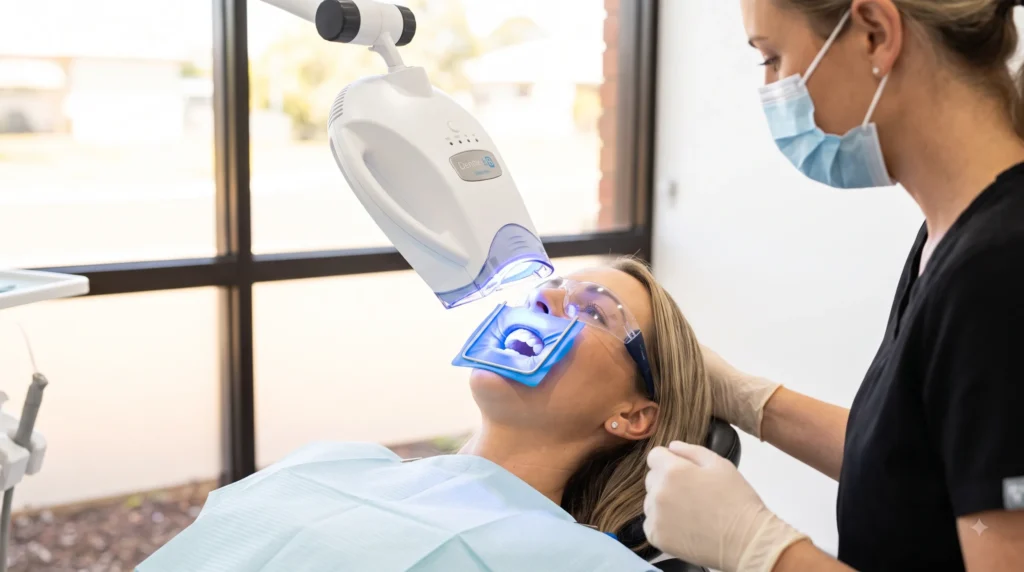
When you choose to invest in professional teeth whitening Toowoomba services, you generally have two main paths to choose from. Both options utilize high-strength, clinical-grade bleaching agents, but they cater to different schedules, budgets, and personal preferences.
Option 1: In-Chair Whitening (Immediate Transformation)
In-chair whitening is performed entirely inside the dental clinic under the constant supervision of your dental team. It is the ideal solution if you have a busy schedule or an upcoming special occasion—such as a wedding, job interview, or milestone birthday—and need immediate results.
- How it Works: The dentist applies a soft, protective liquid barrier over your gums to completely shield them from the whitening gel. The high-concentration peroxide gel is then carefully applied to the front surfaces of your teeth. The gel is left on for 15-to-20-minute intervals and may be activated by a specialized curing light. The process is repeated 3 to 4 times in a single appointment.
- Total Time: Approximately 60 to 90 minutes.
- Result: Your teeth can lighten up to 6 to 8 shades in a single visit.
Option 2: Professional Take-Home Kits (Gradual Control)
If you prefer to whiten your teeth in the comfort of your own home, a custom professional take-home kit offers exceptional results with maximum personal control.
- How it Works: Your dentist takes precise 3D digital impressions or physical molds of your upper and lower teeth. These impressions are used to craft custom-molded, ultra-thin plastic trays that fit your teeth like a glove. You are provided with professional-grade whitening gel syringes. Each day (or night), you place a tiny droplet of gel into each tooth impression on the tray and wear them for a specified duration.
- Total Time: 30 to 60 minutes daily for roughly 10 to 14 consecutive days.
- Result: A stunning, gradual transformation that matches the results of in-chair treatment, with minimal risk of sensitivity.
Side-by-Side Comparison
| Feature | In-Chair Whitening | Custom Take-Home Kit | Supermarket OTC Kits |
| Active Peroxide Strength | High (30% – 35%+) | Medium-High (10% – 16%) | Extremely Low (< 3%) |
| Gum Protection | Custom clinical barrier applied by dentist | Custom-molded fitted trays | None (Generic one-size trays) |
| Treatment Duration | Single 60–90 min appointment | 10–14 days at home | Weeks of daily use |
| Shade Improvement | Up to 6–8 shades lighter | Up to 6–8 shades lighter | 1–2 shades maximum |
| Sensitivity Control | Immediate desensitizing agents applied | Adjustable wear times | Unpredictable / High risk |
| Longevity | Excellent (1–3 years with care) | Excellent (Easy touch-ups) | Very short-lived |
Why You Need a Qualified Teeth Whitening Dentist in Toowoomba
Whitening your teeth is fundamentally a medical procedure involving the oral cavity. While non-dental spas and beauty salons sometimes offer whitening services, turning to an experienced teeth whitening dentist Toowoomba practitioner guarantees a level of safety, diagnostic accuracy, and cosmetic expertise that no beauty therapist can provide.
1. Comprehensive Oral Health Screening
Applying high-strength bleaching chemicals to an unhealthy mouth can lead to severe pain and permanent damage. A qualified dentist will perform a thorough check before any whitening takes place:
- Checking for Undiagnosed Cavities: If bleaching gel enters an open cavity, it reaches the internal nerve of the tooth directly, causing intense, excruciating pain and potentially requiring a root canal.
- Evaluating Gum Health: Bleaching gel placed on inflamed, bleeding gums (gingivitis or periodontitis) causes severe tissue irritation and recession.
- Identifying Existing Restorations: Bleaching gels only change the color of natural tooth structure. They will not whiten porcelain veneers, composite fillings, crowns, or dentures. A skilled dentist evaluates your existing dental work so you don’t end up with mismatched, multi-colored teeth!
2. Tailored Treatment Plans
No two smiles are identical. A practitioner operating in cosmetic dentistry Toowoomba clinic settings will tailor the whitening formula, gel concentration, and exposure times specifically to your enamel thickness, age, and baseline tooth shade.
If you are looking for a trusted cosmetic dentist near me to oversee your transformation, ensuring they take the time to evaluate your overall dental profile is the single best way to protect your health while achieving a dazzling outcome.
What to Expect During an In-Chair Whitening Appointment
If you have chosen in-chair whitening, knowing precisely what will happen during your appointment helps eliminate any anxiety. Here is a step-by-step breakdown of what your session will look like:
Step 1: Baseline Shade Matching & Photography
Your dentist will use a clinical tooth shade guide to measure your starting color. They will take close-up photographs of your smile so you can clearly compare your “before and after” results at the end of the session.
Step 2: Oral Preparation & Polishing
Your teeth are thoroughly cleaned and polished with a specialized pumice paste to remove any lingering surface plaque, food debris, or film. This ensures the whitening gel makes direct, uninterrupted contact with your enamel.
Step 3: Isolating the Soft Tissues
A plastic cheek retractor is gently placed to keep your lips and cheeks away from your teeth. Gauze rolls are inserted to absorb saliva, and a specialized liquid resin barrier (a “gingival dam”) is painted over your gums and light-cured. This seals your gums completely, keeping them safe from the whitening gel.
Step 4: Gel Application & Activation Cycles
The clinical-grade peroxide gel is carefully painted onto the front surfaces of your visible teeth. Depending on the system used, a specialized LED or ultraviolet light may be positioned over your mouth to activate the gel. The gel remains on your teeth for 15 minutes before being gently suctioned off. Fresh gel is then applied for another 15-minute round. This process is typically repeated 3 to 4 times.
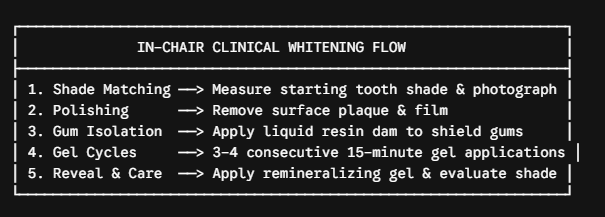
Step 5: The Final Reveal & Remineralization
After the final gel cycle is removed, your gums are unsealed, your mouth is thoroughly rinsed, and a soothing fluoride or amorphous calcium phosphate (ACP) gel is applied to soothe the enamel rods and minimize post-treatment sensitivity. Your dentist will hold up the shade guide so you can celebrate your bright new smile!
Managing and Preventing Tooth Sensitivity
The single most common concern patients express when considering professional whitening is, “Will it hurt?”
It is true that temporary sensitivity can occur during or immediately following a whitening session. This happens because the peroxide temporarily dehydrates the enamel and opens up microscopic dentinal tubules (tiny fluid-filled channels that lead directly to the tooth nerve). When cold air or drinks hit these opened tubules, it can cause a brief, sharp sensation often called a “zing.”
The great news? Post-whitening sensitivity is almost always temporary, lasting between 24 and 48 hours, and can be easily managed with a few proactive steps.
Actionable Tips to Prevent “Zings”:
- Pre-Condition with Desensitizing Paste: Start brushing with a potassium-nitrate-based toothpaste (such as Sensodyne or Colgate Sensitive) for 1 to 2 weeks before your scheduled whitening treatment. Potassium nitrate helps calm the tooth nerves in advance.
- Request a Lower Concentration: If you know you have sensitive teeth, inform your dentist. They can adjust your take-home gel to a lower concentration (e.g., 10% carbamide peroxide) or shorten your in-chair cycle duration.
- Avoid Ice-Cold and Piping-Hot Drinks: For the first 48 hours post-treatment, stick to room-temperature water and foods. Avoid ice cream, scalding coffee, or iced beverages.
- Use Remineralizing Gels: Applying a remineralizing paste (like GC Tooth Mousse) directly into your custom whitening trays after a session will rapidly seal open dentinal tubules and restore hydration to your enamel.
The “White Diet”: Post-Whitening Aftercare & Longevity Guidelines
Congratulations! You have achieved a brilliant, radiant smile. Now, how do you make sure it stays that way for as long as possible?
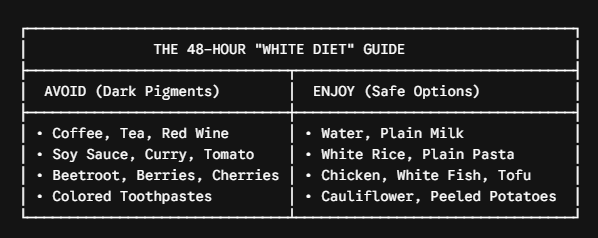
In the first 48 hours following your whitening procedure, your tooth enamel remains slightly dehydrated and its microscopic pores remain open. During this critical window, your teeth act like a dry sponge—they will rapidly absorb any dark pigments they come into contact with!
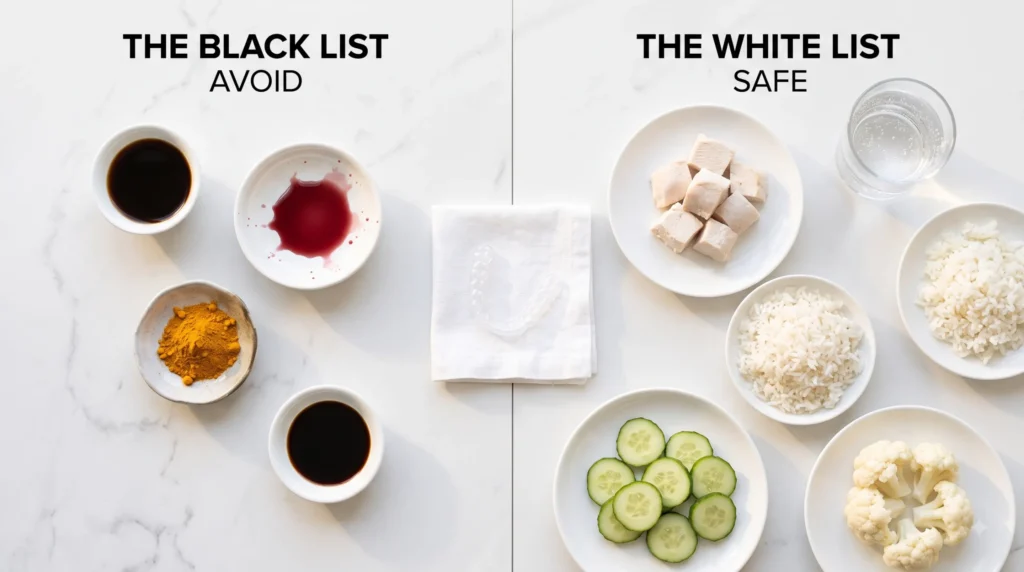
To safeguard your investment, you must strictly follow the “White Diet” for at least 2 to 3 days post-treatment.
What to Avoid (The “Black List”):
- Coffee & Black Tea: The ultimate culprits for rapid re-staining.
- Red Wine & Dark Spirits: Packed with intense tannins and dark chromogens.
- Dark Condiments: Soy sauce, balsamic vinegar, tomato paste, barbecue sauce, and curry spices (especially turmeric!).
- Vibrant Fruits & Vegetables: Beetroot, blueberries, blackberries, cherries, and red cabbage.
- Colored Toothpastes & Mouthwashes: Avoid blue, red, or green toothpaste gels and colored rinses.
What You Can Safely Eat (The “White List”):
- Proteins: Plain chicken breast, white fish, turkey, egg whites, and plain tofu.
- Carbohydrates: White rice, white pasta (with cream-based or garlic olive oil sauce), white bread, and peeled potatoes.
- Dairy: Plain white milk, white cheese, natural plain yogurt, and cottage cheese.
- Vegetables: Cauliflower, peeled cucumbers, bananas, and white onions.
- Beverages: Water, sparkling water, and coconut water.
Long-Term Maintenance Rules
Once the initial 48-hour window has passed, you can return to enjoying your favorite Toowoomba foods and drinks. To maintain your bright results over the next 12 to 36 months, adopt these easy daily habits:
- Drink Staining Beverages Through a Straw: Using a reusable straw bypasses your front teeth entirely, keeping dark liquids away from your enamel.
- Rinse with Water After Eating: If you enjoy a flat white or a bowl of curry, swish your mouth thoroughly with plain water immediately afterward to wash away surface pigments before they settle.
- Maintain Routine Dental Cleans: Visit your clinic every six months for a professional scale and clean. Your hygienist will gently polish away accumulated surface stains before they turn into deeper discoloration.
- Perform Periodic Touch-Ups: If you have custom take-home trays, keep them safe! Purchasing a single syringe of touch-up gel every 6 to 12 months allows you to refresh your shade in just one or two evenings.
Frequently Asked Questions
Does teeth whitening weaken or damage tooth enamel?
No. When performed using approved clinical protocols under the guidance of a professional, whitening does not erode or damage your tooth enamel. The bleaching process simply breaks down organic stain molecules lodged inside the mineral structure of the tooth. Once the fluid level inside the tooth normalizes over 24–48 hours, the tooth is just as strong as it was before.
How many shades lighter will my teeth get?
Results vary based on your starting shade, age, and the underlying cause of discoloration. Yellow-toned teeth tend to whiten most dramatically, often lightening by 4 to 8 shades. Gray or brown-toned teeth (or teeth affected by childhood antibiotics) lighten more gradually and may require a combined approach using custom take-home trays over several weeks.
Will whitening work on fillings, crowns, or veneers?
No. Bleaching agents are chemically formulated to interact only with natural tooth enamel and dentin. They will not alter the color of dental porcelain, composite resin fillings, caps, or bridges. If you have visible fillings or crowns on your front teeth and want a brighter overall look, your dentist will recommend whitening your natural teeth first, then replacing your old restorations to match your new shade.
How long do professional teeth whitening results last?
With proper care and maintenance, professional whitening results typically last anywhere from 1 to 3 years. Longevity depends heavily on your lifestyle habits. If you smoke or drink dark tea and red wine daily without rinsing, stains will return faster than if you follow good oral hygiene practices and perform occasional home touch-ups.
Elevate Your Confidence Today
Your smile is one of your greatest assets. It influences how you feel in social settings, how you present yourself professionally, and how comfortably you express joy every day.
If dullness or yellowing is holding your confidence back, professional teeth whitening Toowoomba treatments offer a safe, predictable, and remarkably fast path to a luminous smile. By choosing a qualified clinical team to guide your treatment, you ensure that your journey is comfortable, completely customized, and protected every step of the way.
Take the first step toward a brighter, more vibrant you—book a dedicated cosmetic consultation and discover what professional whitening can do for your confidence!
Read more:

Comments are off for this post.